
National News
Senate Approves Electoral Act Amendment To End Jurisdictional Conflicts In Pre-Election Cases


Tayo Busayo, Abuja
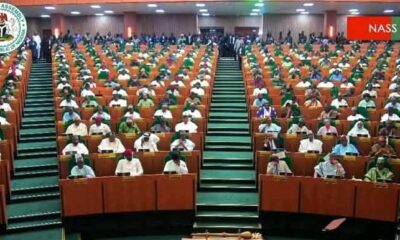
DAILY COURIER – The Senate on Thursday passed the 2026 Electoral Act Amendment Bill, introducing a sweeping reform aimed at ending years of jurisdictional confusion and delays in the resolution of pre-election disputes.
The legislation, presented by Chairman of the Senate Committee on INEC Senator Simon Lalong (APC-Plateau), seeks to create a uniform and predictable legal pathway for handling disputes arising from party primaries and candidate nominations ahead of elections.
MORE STORIES: https://dailycourier.com.ng/buharis-ex-ministers-under-the-hammer-court-convicts-mamman-orders-sylvas-assets-seized/
Lawmakers said the amendment is designed to close procedural gaps that have long undermined the integrity of Nigeria’s electoral process. These include inconsistent court rulings, forum shopping, and prolonged litigation that often spill into the post-election period.
“Democracy thrives not only on the conduct of elections, but also on the credibility and predictability of the legal processes that precede them,” Lalong told the chamber. “When the law governing pre-election matters is unclear or contradictory, the entire electoral system becomes vulnerable to abuse and instability.”
The bill targets Section 29 of the principal Act and introduces a new Section 29A to clearly define which courts have authority over specific categories of pre-election cases.
Under the new framework, aspirants will be able to file suits either in the Federal Capital Territory or in the judicial division where the cause of action arose. The provision is intended to make litigation more accessible and practical for candidates contesting primaries across the country.
The most substantive change lies in the establishment of a tiered jurisdictional structure. For elections into the National Assembly, governorship positions, and state houses of assembly, pre-election matters will now commence at the Federal High Court, with appeals directed to the Court of Appeal.
For presidential and vice-presidential contests, the bill vests original jurisdiction in the Court of Appeal, with the Supreme Court serving as the final appellate court. Lalong said this arrangement reflects the national significance of presidential elections and ensures they are adjudicated by a superior court with the capacity for swift and authoritative decisions.
He added that assigning other pre-election cases to the Federal High Court would promote legal specialization and consistency, given INEC’s federal mandate in administering elections.
The amendment also seeks to outlaw the growing practice of litigants filing multiple suits in different divisions to obtain conflicting orders. The bill explicitly bars any court from entertaining pre-election matters outside the framework outlined in Section 29A, a clause aimed at restoring procedural order and public trust in the judiciary.
Click on the link below to follow DAILY COURIER on WhatsApp: https://whatsapp.com/channel/0029VaAJv3FFnSz23aQ4Ab1M
Senator Mohammed Monguno (APC-Borno), who seconded the motion, described the reform as both timely and essential. He said it would improve the quality of electoral litigation and reduce the constitutional tensions that have often pitted courts against each other.
Senate President Godswill Akpabio, in his closing remarks, praised the committee for its thorough work and expressed optimism that President Bola Tinubu would assent to the bill. He noted that the reform would strengthen democratic accountability and enhance confidence in Nigeria’s electoral system.
The bill now awaits presidential assent before it becomes law. If enacted, it is expected to reshape pre-election adjudication ahead of the 2027 general elections by reducing delays, eliminating contradictory judgments, and providing clarity on where and how electoral disputes should be resolved.









Tolu Bankole Mourns Former Ogun Lawmaker, Hon. Lukman Adiro

President’s Visit: Kebbi Commuters Hail Tinubu As Malando-Ngaski Road Cuts Travel Time By Half

UEFA Unanimously Backs Diallo To Oust Infantino In March 2027 FIFA Election

Top 25 Universities In Nigeria According To TIMES Ranking 2025

Nigeria Ranked Second In Africa for Catholic Population
