
Cover Page
Resign If You Can’t End Insecurity, Reps Tell Service Chiefs

• Reps summon NSA, ministers over defence spending amid rising kidnappings nationwide
• Defence HQ warns public against AI-fabricated video of CDS, calls it misinformation
• COAS urges media to counter fake news, dominate information space for security
‘Seun Ibukun-Oni Abuja
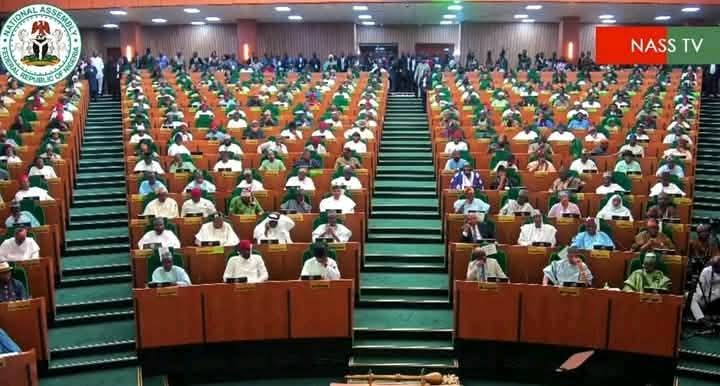
DAILY COURIER — The House of Representatives has issued a strong ultimatum to Nigeria’s service chiefs, telling them to resign if they lack the capacity to end the country’s worsening insecurity.
Lawmakers made the demand on Tuesday, June 9, 2026, during plenary, insisting that Nigerians deserve decisive action, not excuses, amid rising attacks, kidnappings and banditry across multiple states.
The resolution came after a heated debate on the security situation, with members calling on President Bola Ahmed Tinubu to urgently review the nation’s security strategy.
Speaker after speaker accused security agencies of failing to match their budgetary allocations with visible results on the ground.
“Resign if you can’t end insecurity,” one lawmaker declared, capturing the mood of the chamber as frustration boiled over.
The House resolved that the service chiefs must adopt a more aggressive, intelligence-driven approach if they intend to retain public and legislative confidence.
MORE STORIES: https://dailycourier.com.ng/igp-disu-to-west-africa-unite-now-or-lose-fight-to-borderless-crime/
Members stressed that the constitutional duty to protect lives and property cannot be outsourced, and that citizens are losing faith in the state’s ability to secure them.
In a related development, the House also queried defence spending, demanding accountability for billions allocated to security agencies in recent budgets.
Lawmakers argued that despite huge appropriations, insecurity has continued to escalate, with communities in the North West, North Central and South East bearing the brunt.
To address the discrepancy, the House summoned the National Security Adviser, NSA, alongside relevant ministers to appear before it and explain how defence funds are being utilized.
The summons covers the Ministers of Defence, Finance, and Police Affairs, who are expected to provide detailed breakdowns of expenditures and operational outcomes.
Members insisted that Nigerians must know if funds meant for weapons, logistics and personnel welfare are actually reaching frontline troops.
The Chairman of the House Committee on Defence noted that oversight on security spending is now non-negotiable given the scale of killings and abductions.
While the legislature pushed for accountability, the Defence Headquarters moved to counter a different threat: misinformation.
The military high command debunked a fabricated video circulating on social media that purported to show the Chief of Defence Staff, General OO Oluyede.
In some versions of the clip, the person featured was falsely presented as the Chief of Army Staff, Lieutenant General OO Oluyede.
The Defence Headquarters described the video as “false, misleading and a deliberate attempt to misinform the public” about military leadership.
Director of Defence Information, Major General Samaila Uba, said assessment showed clear signs of Artificial Intelligence-driven digital manipulation.
He stated that the content did not originate from any official military source and should be disregarded in its entirety.
The DHQ expressed concern over the growing trend of using technology to fabricate content involving senior military officers.
Such fabrications, it warned, undermine public confidence and could compromise ongoing national security operations if left unchecked.
The issue of information warfare took centre stage again on Tuesday, June 9, 2026, when the Chief of Army Staff, Lieutenant General Waidi Shaibu, addressed media professionals in Abuja.
Speaking at the opening of the Directorate of Army Public Relations Combined First and Second Quarter Media Workshop 2026 at the Army War College Nigeria, the COAS said dominance of the information space is now critical to operational success.
Represented by the Chief of Civil-Military Affairs, Major General Musa Etsu-Ndagi, the Army Chief described strategic communication as a “force multiplier” in modern warfare.
He noted that in today’s conflict environment, perception often shapes reality, and adversaries exploit information gaps to spread fear and confusion.
General Shaibu urged journalists to take a leading role in countering fake news, misinformation and AI-generated content that target the military.
“In today’s complex information environment, the media remains a key partner in shaping narratives, building public confidence and denying adversaries the opportunity to exploit information gaps,” he said.
He stressed that transparent and proactive communication enhances credibility, fosters trust, and strengthens the national security framework.
The workshop theme, “Media Integration as a Force Multiplier for Joint and Multi-Agency Operational Success,” was described as timely and forward-looking.
Colonel Appolonia Anele, Acting Director Army Public Relations, said the training would help stakeholders adopt global best practices in conflict-sensitive reporting.
She warned that contemporary threats now extend beyond the battlefield into the information domain, where fake news can be as destructive as bullets.
The COAS commended Colonel Anele for organizing the workshop and for advancing the Army’s strategic communication capabilities.
He also appreciated President Bola Ahmed Tinubu for his sustained support and strategic guidance toward enhancing the Armed Forces’ effectiveness.
General Shaibu reaffirmed the Nigerian Army’s commitment to defending sovereignty, territorial integrity and constitutional order despite security challenges.
He highlighted recent operational gains achieved through inter-agency collaboration, intelligence sharing and unified planning, urging the media to publicize them responsibly.
The Army Chief warned that leaving the information space unguarded allows hostile actors to distort realities and demoralize troops and citizens.
Participants at the workshop included editors, correspondents, military public relations officers and communication specialists from other security agencies.
The two-day workshop is expected to produce coordinated strategies for countering disinformation and improving civil-military relations across theatres of operation.
Click on the link below to follow DAILY COURIER on WhatsApp: https://whatsapp.com/channel/0029VaAJv3FFnSz23aQ4Ab1M
Taken together, the developments in the National Assembly, Defence Headquarters and Army headquarters reflect a security architecture under pressure.
Lawmakers are demanding results and accountability, the military is battling both insurgents and fake news, and the public is caught in between.
Whether the new push for aggressive strategy and better communication will translate into reduced violence remains the central question for millions of Nigerians.
As the House awaits responses from the NSA and ministers, and as the military doubles down on information warfare, all eyes are now on tangible changes on the ground.










Tolu Bankole Mourns Former Ogun Lawmaker, Hon. Lukman Adiro

President’s Visit: Kebbi Commuters Hail Tinubu As Malando-Ngaski Road Cuts Travel Time By Half

UEFA Unanimously Backs Diallo To Oust Infantino In March 2027 FIFA Election

Top 25 Universities In Nigeria According To TIMES Ranking 2025

Nigeria Ranked Second In Africa for Catholic Population
