
Editorial
When Elites Play The Ethnic Card, Nigeria Loses

EDITORIAL
DAILY COURIER – Nigeria’s biggest threat is not its diversity, it is the dangerous habit of its elite to exploit that diversity for political or personal gain.
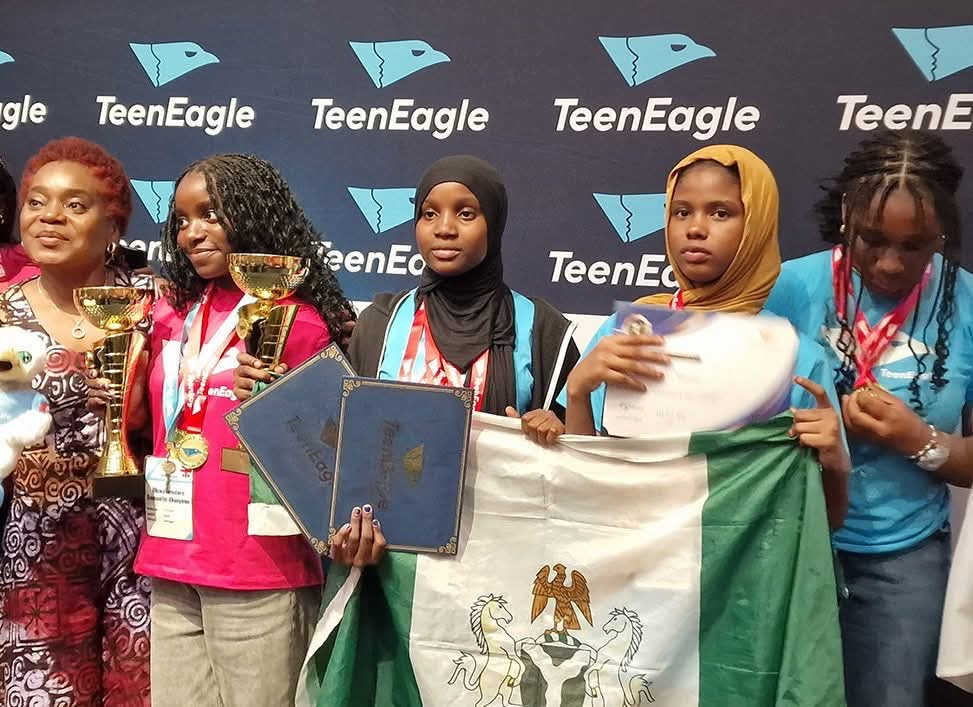
The country was handed a golden opportunity to unite behind a remarkable achievement at the 2025 TeenEagle Global Finals in the United Kingdom. Eight students from Nigerian Tulip International Colleges (NTIC): five from the Abuja campus and three from Yobe; competed against over 900 students from 46 countries and brought home 7 gold, 4 silver, and 3 bronze medals. They swept top honours in English language skills, debate, spelling bee, and charisma, putting Nigeria firmly on the world stage for academic brilliance.
This was not a sectional success. It was a Nigerian triumph, a product of hard work, merit, and collaboration across state, ethnic, and religious lines. But in the hands of some prominent figures, the story quickly took on a divisive tone.
MORE STORIES: https://dailycourier.com.ng/political-economy-of-illicit-financial-flow-in-nigeria/
Many Northern elites singled out one of the Yobe students, Nafisa Abdullahi Aminu, for special material and national honours, framing her achievement almost exclusively through the lens of her state of origin and religious identity. While his praise for her excellence was well-deserved, the framing: comparing her to sports teams that received lavish rewards — subtly reduced a collective Nigerian victory into a sectional triumph.
Former Minister of Communications and Digital Economy, Isa Ali Pantami, led the charge, singling out one student, Nafisa Abdullahi Aminu from NTIC Yobe, for lavish state rewards: $100,000, a three-bedroom flat, and a national honour. In praising her (rightly) for her brilliance, he reframed a team achievement into a regional one, drawing parallels with rewards given to sports teams and implying that the rest of the winning students were almost incidental.
The ethnic bait worked. Former Vice President Atiku Abubakar waded in, reinforcing the selective focus and applauding Nafisa specifically, without equal recognition for the Abuja-based students who also won global awards. The Presidency then compounded the problem by rushing out a congratulatory statement that falsely implied all the winning students were from the Yobe school — a factual error that, intentionally or not, fed the narrative of sectional ownership.
This is not harmless rhetoric. It is part of a long, corrosive pattern where political leaders, instead of using moments of national pride to strengthen unity, narrow them into tribal or religious boxes to curry favour with certain constituencies. It breeds resentment, weakens our sense of shared nationhood, and sends a dangerous message to the next generation: that your state or religion matters more than your shared Nigerian identity.
Click on the link below to follow DAILY COURIER on WhatsApp 👇 https://whatsapp.com/channel/0029VaAJv3FFnSz23aQ4Ab1M
The truth is simple: Nafisa, Oluwasemilore, Cara, Rukayya, Jayden, Mansata, Hadiza, and Fatim are all Nigerian champions. Their medals do not belong to Yobe, Abuja, or any state — they belong to Nigeria. To pretend otherwise for political mileage is a betrayal of the very unity we claim to value.
Our leaders must learn that real nation-building is done in moments like these — when we choose to tell the full story, honour all contributors, and reject the easy applause of sectional politics. Ethnic baiting may win headlines, but it costs us trust, cohesion, and progress.
The NTIC students have shown us what is possible when Nigerians work together. It is the political class that must now prove it has learned the lesson.




Tolu Bankole Mourns Former Ogun Lawmaker, Hon. Lukman Adiro

President’s Visit: Kebbi Commuters Hail Tinubu As Malando-Ngaski Road Cuts Travel Time By Half

UEFA Unanimously Backs Diallo To Oust Infantino In March 2027 FIFA Election

Top 25 Universities In Nigeria According To TIMES Ranking 2025

Nigeria Ranked Second In Africa for Catholic Population
