
Education
UniAbuja VC Row Deepens Over PhD Requirement

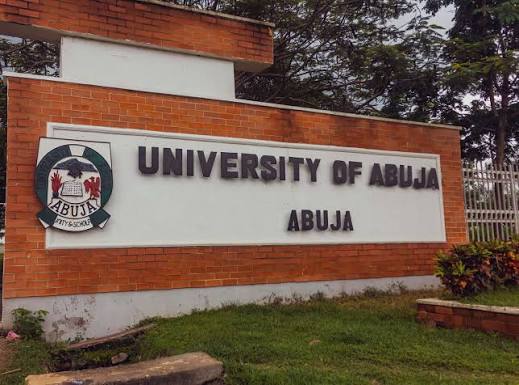
Monday Reuben, Abuja
DAILY COURIER — Fresh controversy has erupted over the appointment of Professor Hakeem Fawehinmi as substantive Vice Chancellor of the University of Abuja, with questions mounting over whether due process was followed in line with established academic requirements.
At the centre of the dispute is the eligibility criterion for the position, particularly the requirement that candidates must possess a Doctor of Philosophy degree. Critics argue that the appointment may have breached this fundamental condition, raising concerns about the integrity of the selection process.
The Vice Chancellor position was advertised in 2025 with clearly defined qualifications, including a PhD and a minimum of 10 years’ experience as a professor. These criteria, stakeholders insist, are not merely procedural but form the legal and academic foundation for such high level appointments.
Click on the link below to follow DAILY COURIER on WhatsApp: https://whatsapp.com/channel/0029VaAJv3FFnSz23aQ4Ab1M
Sources familiar with the process revealed that over 50 applicants initially expressed interest in the position. Following security screening conducted by the Department of State Services, 10 candidates were shortlisted.
The shortlisted candidates subsequently underwent a rigorous two day interview conducted by a Joint Council and Senate Selection Board, a process designed to ensure merit based selection.
At the end of the exercise, three candidates emerged, with the Governing Council adopting a scoring system that ultimately produced Fawehinmi as the preferred candidate.
However, the process has since come under scrutiny following claims that the appointee may not have met the core academic qualification stipulated in the advertisement.
The controversy largely hinges on the distinction between academic and professional qualifications. Critics argue that a medical fellowship, reportedly held by the appointee, does not equate to a PhD and therefore may not satisfy the eligibility requirement.
This position draws support from a judgment of the National Industrial Court of Nigeria delivered on May 8, 2025, which reportedly clarified that medical fellowship qualifications cannot be regarded as equivalent to a doctoral degree.
The court was said to have drawn a clear line between professional certifications and academic doctorates, stating that postgraduate diplomas conferring fellowship status fall short of the requirements for a PhD.
Further reinforcing this interpretation is a clarification issued on March 5, 2026, by the Federal Ministry of Education, which emphasised that while postgraduate medical institutions may be accredited to award PhDs, their fellowship certifications remain professional rather than academic qualifications.
The development has prompted a formal petition to both the Ministry and the University’s Governing Council, effectively placing the appointment under potential review.
Stakeholders warn that if the advertised requirement was strictly a PhD or its equivalent, and if a fellowship does not meet that threshold, then the validity of the entire selection process could be called into question.
Beyond the immediate controversy, analysts say the situation reflects a broader pattern within Nigeria’s university system, where the appointment of vice chancellors is increasingly becoming contentious.
What is intended to be a transparent and merit driven process is, in some instances, being overshadowed by allegations of procedural breaches, institutional interference, and disregard for statutory provisions.
Under the University Miscellaneous Provisions Act, governing councils are empowered to oversee the appointment of vice chancellors, including advertising vacancies, screening candidates, and conducting interviews.
The principle of university autonomy embedded in the law is meant to protect institutions from undue interference and ensure that leadership appointments are based strictly on merit and competence.
However, critics argue that recent developments suggest that some governing councils may be deviating from these principles, raising concerns about accountability and adherence to due process.
MORE STORIES: https://dailycourier.com.ng/apc-declares-no-restriction-on-nomination-forms-as-nwc-unveils-2027-primary-timetable/
Federal authorities have consistently maintained that while professional fellowships are valuable for clinical and technical expertise, they do not replace the PhD as the benchmark qualification for academic leadership roles.
As the controversy continues to unfold, attention is now focused on the Governing Council of the University of Abuja and whether it will stand by its decision or reconsider the appointment in light of the legal and regulatory concerns raised.
For many observers, the outcome of this dispute will not only determine the fate of the current appointment but also set a precedent for how similar cases are handled across Nigeria’s higher education system.
With petitions submitted and questions lingering, stakeholders say the need for clarity, transparency, and strict adherence to established guidelines has never been more urgent.





Tolu Bankole Mourns Former Ogun Lawmaker, Hon. Lukman Adiro

President’s Visit: Kebbi Commuters Hail Tinubu As Malando-Ngaski Road Cuts Travel Time By Half

UEFA Unanimously Backs Diallo To Oust Infantino In March 2027 FIFA Election

Top 25 Universities In Nigeria According To TIMES Ranking 2025

Nigeria Ranked Second In Africa for Catholic Population
