
National News
Questions Trail Nigerian Army’s Discovery Of Borehole in Sambisa Forest Terrorist Hideout


Bello Alhassan, North East
DAILY COURIER – The Nigerian Army on Wednesday disclosed a significant development from its latest offensive in the heart of Sambisa Forest, long a bastion for Boko Haram insurgents. While the military reported a successful joint clearance operation that forced the terrorists to abandon several strongholds, it was the surprising discovery of a borehole in one of the camps that has sparked outrage and deep questions from Nigerians.
According to an update posted on the Army’s official Facebook page, troops of Operation Hadin Kai in collaboration with the Civilian Joint Task Force (CJTF) launched a coordinated assault between 6am and 12pm on May 15, targeting Garin Malam Ali, Garin Glucose, and Ukuba, notorious enclaves within the dense Sambisa terrain.
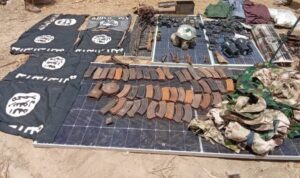
The operation reportedly flushed out the insurgents who fled, leaving behind caches of arms and equipment used in making improvised explosive devices (IEDs). But buried among the details of the operation was a revelation that quickly captured public attention: the insurgents had a functioning borehole within the forest.
MORE STORIES: https://dailycourier.com.ng/inflation-eases-in-april-signals-brighter-economic-outlook/
“How did they even manage to dig a borehole deep inside Sambisa while some of our rural communities have gone decades without clean water?” asked Adams Ozomata, reacting to the post online. “Who was the engineer or company that drilled it? How did trucks and equipment reach that spot unnoticed?”
The borehole, seemingly equipped with a mono pump, raised not just eyebrows, but suspicions about possible enablers and deeper systemic failures. For citizens like Yahaya Mikail, the irony cuts deep: “Boko Haram 10 years = 1 borehole, my community 400 years = 0 borehole. Nigeria why?”
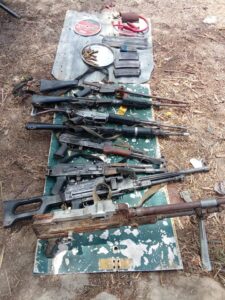
Recovered ammunitions from the operation
Darlington Ukwoma echoed the confusion of many: “They even have access to clean water via mono pump? Who drilled the pump for them? Where did they buy the materials from and how were they able to transport it to the forest?”
Military sources did not elaborate on the borehole in their official communication, focusing instead on the success of the mission and the continuation of the operation to sanitize the forest. However, the questions raised by citizens suggest that Nigerians are hungry for more than just battlefield victories—they want accountability, transparency, and answers about how insurgents can access infrastructure that remains elusive for peaceful communities.
“This isn’t just about a borehole,” said Terence Louis, another commentator. “It’s about how long these terrorists were comfortable enough in one place to build one.”
Muhammad El-rufae added somberly, “Some villages didn’t even have access to water, but the terrorists do. May God have mercy.”
https://dailycourierng.blogspot.com/2025/03/inec-advises-political-parties-to-stick.html
As the military continues its operations in Sambisa, pressure is mounting for the Nigerian government to not only dismantle terrorist operations but also interrogate how these groups have built quasi-communities in remote regions with infrastructure that even some legitimate local governments cannot provide for their own people.
Until then, the borehole in Sambisa remains a powerful symbol—of both the enduring menace of insurgency and the haunting question of why basic amenities are more accessible in a terrorist enclave than in many law-abiding Nigerian communities.







Tolu Bankole Mourns Former Ogun Lawmaker, Hon. Lukman Adiro

President’s Visit: Kebbi Commuters Hail Tinubu As Malando-Ngaski Road Cuts Travel Time By Half

UEFA Unanimously Backs Diallo To Oust Infantino In March 2027 FIFA Election

Top 25 Universities In Nigeria According To TIMES Ranking 2025

Nigeria Ranked Second In Africa for Catholic Population
