
Business
FG’s New Cattle Centres Spark ‘RUGA 2.0’ Debate Across Nigeria

Alhassan Bello Kaduna
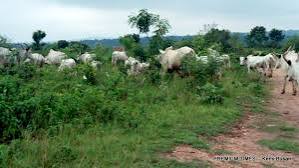
DAILY COURIER– The Federal Government has announced plans to establish cattle breeding centres in each of Nigeria’s six geopolitical zones, a move aimed at modernising the livestock sector, boosting food production, and curbing the recurring clashes between herders and farmers.
The plan was disclosed by the Minister of State for Agriculture and Food Security, Aliyu Sabi Abdullahi, during the second day of the Citizens-Government Engagement and Midterm Assessment of the Tinubu administration, organised by the Sir Ahmadu Bello Memorial Foundation in Kaduna. The announcement was also highlighted on the official X (formerly Twitter) account of the Minister of Information and National Orientation, Mohammed Idris.
Abdullahi explained that the new centres would operate as modern livestock hubs and would be delivered through the collaboration of several ministries, including Agriculture, Environment, Water Resources, Livestock Development, and Marine and Blue Economy. According to him, the goal is to move Nigeria away from traditional nomadic cattle rearing to a structured, commercially viable system that will reduce conflicts, boost meat and dairy production, and strengthen food security.
MORE STORIES: https://dailycourier.com.ng/inec-noa-strengthen-synergy-to-drive-voter-participation-nationwide/
Earlier this year, the National Economic Council had raised concerns over the outdated and unsustainable nature of livestock production in Nigeria and called for urgent reforms. The council stressed the need for the country to modernise its livestock practices to stem violent clashes that have left scores of people dead in Plateau, Benue, Kwara and other parts of the country.
Public Reaction
The announcement has generated heated reactions from Nigerians across social media platforms. While some citizens see the initiative as a progressive step that could end decades of conflict, others have criticised the plan, describing it as a veiled reintroduction of the controversial RUGA (Rural Grazing Area) policy from previous administrations.
Chiagoze Michael, reacting online, said the centres should be set up in all 36 states, with each state’s indigenes running their own centres. “No problem with that,” he added.
However, some Nigerians were strongly opposed to government involvement in cattle business. Emmanuel Okorie stated, “Cattle business is a private business and government should not concern itself with this.” Similar views were echoed by Louis Chidi, who argued that government has never created special centres for other types of traders or compensated them when their shops were destroyed.
Other respondents were wary of repeating past mistakes. Austin Akpelu asked, “Is that not the rejected RUGA program?” while Staley Madu said, “It can’t fly in Igbo land, we have no land for cattle ranch.”
Still, some welcomed the plan. Godmade Peace described the policy as “a welcome development especially if this would be manned by indigenes of those zones…that would not only encourage these zones to rear cattle but also end clashes between farmers and cattle rearers.”
Some citizens expressed suspicion that such policies were politically motivated. Otuekong Divine said, “How is this different from Buhari’s cattle colonies? When did cattle rearing become a federal government investment?” while Godwin Alfred claimed the Tinubu administration was simply trying to complete what he described as an APC manifesto priority.
Click the link below to follow DAILY COURIER on WhatsApp 👇 https://whatsapp.com/channel/0029VaAJv3FFnSz23aQ4Ab1M
SB Nelson, referencing international best practices, remarked, “In Europe, ranches are privately built and cows are kept in one place. Nigeria’s method is wickedly different, they just want cows to keep roaming and eating free food, destroying farms and causing fights.”
Government’s Next Steps
The Ministry of Agriculture has assured that the centres, once operational, will provide a blueprint for modern livestock production, improve the supply of beef and dairy products, and reduce the risk of conflict between farmers and herders. However, concerns about land use, ownership, and the role of government versus private enterprise continue to dominate public discourse.









Tolu Bankole Mourns Former Ogun Lawmaker, Hon. Lukman Adiro

President’s Visit: Kebbi Commuters Hail Tinubu As Malando-Ngaski Road Cuts Travel Time By Half

UEFA Unanimously Backs Diallo To Oust Infantino In March 2027 FIFA Election

Top 25 Universities In Nigeria According To TIMES Ranking 2025

Nigeria Ranked Second In Africa for Catholic Population
