
Cover Page
FG Debunks ₦8trn “Off-budget” Claim, Insists All Spending Has Legal Backing

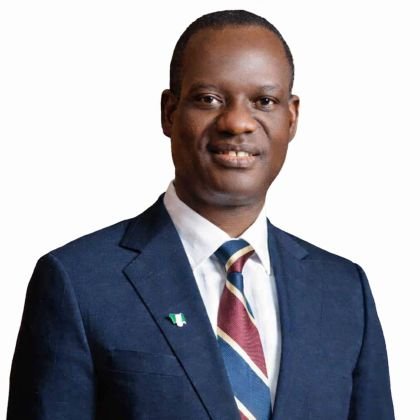
• Government says statutory transfers follow existing laws
• Fund’s advice focused on budget presentation, not fraud
• President seeks end to multiple budget system
Tayo Busayo, Abuja
DAILY COURIER — The Federal Government has dismissed claims that about two percent of GDP, amounting to over ₦8 trillion, was spent outside the approved budget, describing the allegations as “incorrect” and capable of misleading Nigerians about the country’s financial management.
In a press release dated July 5, 2026 and signed by the Honourable Minister of Finance and Coordinating Minister of the Economy, Taiwo Oyedele, the government said the claims referenced the IMF Representative in Nigeria and the Fund’s 2026 Article IV Consultation Report.
“For the avoidance of doubt, the Federal Government does not operate a ‘shadow budget’ or expend public funds outside the constitutional and statutory framework established for public finance,” the statement said.
The Ministry anchored its position on Sections 80 to 83 and 162 of the 1999 Constitution, which mandate that public funds can only be withdrawn and spent in accordance with laws enacted by the National Assembly.
MORE STORIES: https://dailycourier.com.ng/nigerian-british-grandma-arrested-with-13kg-cocaine-concealed-in-plantain-peels/
“Accordingly, Federal Government expenditure is incurred pursuant to duly enacted Appropriation Acts, Supplementary Appropriation Acts, and other statutory authorities enacted by the National Assembly,” it stated.
The government further explained that multi-year capital projects that span several budgets are implemented under existing laws and “approved provisions for capital rollovers where applicable.”
“These are recognised features of public financial management and should not be misconstrued as expenditures outside the budget,” it added.
The Ministry faulted the manner the allegations were presented, saying those making them ought to be specific.
“It is inaccurate to suggest that trillions of naira have been secretly spent outside legislative approval. Such allegations should have identified the specific projects purportedly executed without appropriation or legal authority and present credible evidence in support of the claim. To be meaningful, assertions of this magnitude must be supported by verifiable facts rather than conjecture.”
For public education, the statement stressed the need to distinguish between appropriation, expenditure authorisation, financing, and fiscal reporting.
The Ministry explained that Nigeria’s public finance framework contains several statutory transfers, first-line charges and intervention mechanisms established by Acts of the National Assembly.
It noted that statutory allocations and contributions are made to development commissions and other agencies created by law. These are not discretionary votes but obligations backed by legislation.
The statement also pointed to cost of collection and cost of administration retained by designated revenue-collecting agencies. This, it said, is “expressly provided under relevant legislation” and forms part of the legal framework for revenue administration.
On capital spending, the Ministry said some agencies and the Federal Capital Territory have capital expenditure approved in separate budgets by the National Assembly. This arrangement, it added, is different from but still within the overall budgetary process.
The government further highlighted special interventions approved by law to address national priorities. These cover areas such as security, infrastructure, disaster response, and other strategic national programmes or emergencies.
Finally, it listed debt service obligations and other statutory transfers that are “authorised under applicable legislation” and must be paid as first-line charges before other expenditures.
The Ministry insisted these expenditures are lawful and transparent.
“These expenditures are neither secret nor illegal. They are established by law, disclosed in various fiscal reports, and subject to applicable oversight, audit and accountability mechanisms,” it said.
It added that differences in how they are presented “under international statistical and reporting standards adopted by the Federal Government” should not be twisted.
“Such classification differences should not be misrepresented as evidence of unlawful expenditure.”
The government also rejected the suggestion that the reported amount increased the budget deficit.
“It is equally incorrect to suggest that the reported amount represents an increase in budget deficit. A fiscal deficit is determined by the relationship between total government revenues and total government expenditures,” the statement explained.
It clarified that the financing source does not change the deficit figure: “Whether a capital project is financed through annual appropriations, supplementary appropriations, statutory transfers, approved intervention mechanisms, or other lawful financing arrangements does not, by itself, increase the fiscal deficit.”
On the IMF, the Ministry said the Fund’s concern was about reporting standards, not illegality.
“Indeed, the IMF’s observation relates primarily to the comprehensiveness, timing and presentation of fiscal reporting rather than the legality of expenditure.”
It noted that Nigeria, “like many countries, continues to strengthen the alignment between budget presentation and international fiscal reporting standards as part of ongoing public financial management reforms.”
The statement recalled that President Bola Ahmed Tinubu had himself sought to end fragmented budgeting.
“As a matter of fact, His Excellency, President Bola Ahmed Tinubu, GCFR had himself formally requested the National Assembly to end the practice of running multiple and overlapping budgets, and rather harmonise into a single, cohesive framework during his presentation of the 2026 Appropriation Bill to a joint session of the National Assembly on December 19, 2025.”
The Ministry said fiscal reforms under the Tinubu administration have yielded results and earned international recognition.
“The Federal Government remains firmly committed to prudent fiscal management, transparency and accountability. Recent reforms have significantly strengthened public financial management with ongoing improvements in budget assumptions and credibility, transparent revenue administration, digitalisation of government financial processes, and stronger treasury management.”
It added: “These reforms have been acknowledged by the IMF itself and other multilateral institutions, as well as international credit rating agencies, major media organisations and investors.”
Nigeria’s fiscal framework allows for certain expenditures outside the annual Appropriation Act. Under the Constitution and Fiscal Responsibility Act 2007, items like statutory transfers to NDDC, UBEC, and debt service are first-line charges.
The IMF’s Article IV reports over the last three years have consistently urged Nigeria to improve budget transparency and present a consolidated fiscal account. In December 2025, President Tinubu told lawmakers the era of running separate budgets for MDAs should end to boost credibility.
Click on the link below to follow DAILY COURIER on WhatsApp:https://whatsapp.com/channel/0029VaAJv3FFnSz23aQ4Ab1M
Civil society groups have in recent weeks cited the IMF report to allege leakages. The government says that misreads the technical advice.
The Ministry urged Nigerians to engage based on facts.
“Public debate is both welcome and essential in a democratic society. However, it should be based on facts and an accurate understanding of Nigeria’s constitutional and fiscal framework. Mischaracterising technical observations as evidence of unlawful expenditure neither advances informed public discourse nor strengthens democratic accountability.”
It concluded with a pledge: “The Federal Government will continue to uphold the rule of law, maintain transparency in the management of public resources, and work with the National Assembly, oversight institutions, development partners and the Nigerian people to further strengthen fiscal governance in line with international best practices.”









Tolu Bankole Mourns Former Ogun Lawmaker, Hon. Lukman Adiro

President’s Visit: Kebbi Commuters Hail Tinubu As Malando-Ngaski Road Cuts Travel Time By Half

UEFA Unanimously Backs Diallo To Oust Infantino In March 2027 FIFA Election

Top 25 Universities In Nigeria According To TIMES Ranking 2025

Nigeria Ranked Second In Africa for Catholic Population
