
Business
CBN Holds Key Rates Steady, Keeps Fight Against Inflation In Focus

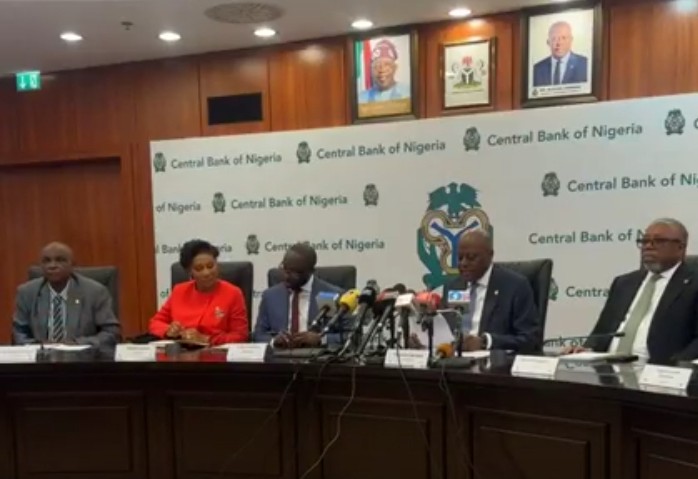
• CBN’s monetary policy committee holds rates for 305th time, cites need for stability
Tayo Busayo, Abuja
DAILY COURIER – The Central Bank of Nigeria’s Monetary Policy Committee has again held all key policy parameters steady, opting for continuity as it seeks to consolidate gains in inflation control and maintain financial system stability.
At the end of its 305th meeting in Abuja on Wednesday, May 20, 2026, the 12-member committee voted unanimously to retain the Monetary Policy Rate at 26.5 percent. The decision marks the third consecutive meeting where the MPC has chosen to pause rate adjustments after a prolonged cycle of tightening that began in 2023.
Announcing the outcome on the CBN’s official Facebook page, the committee said the hold decision was necessary to allow previous policy measures to fully permeate the economy and to assess their impact on price stability.
MORE STORIES:https://dailycourier.com.ng/arrest-prosecute-vote-buyers-inec-boss-tells-security-agencies-ahead-of-ekiti-poll/
Cash Reserve Ratio, Corridor Also Unchanged
The MPC also kept the Cash Reserve Ratio unchanged at 45 percent for commercial banks and 16 percent for merchant banks. Public sector deposits not covered by the Treasury Single Account remain subject to a 75 percent CRR, a measure aimed at limiting liquidity that could fuel inflationary pressure.
On the standing facilities corridor, the committee maintained the asymmetric corridor at +50 and -450 basis points around the MPR. The corridor continues to guide short-term interbank rates and manage liquidity within the banking system.
The decisions were reached after a review of global and domestic economic developments, including inflation trends, exchange rate movements, fiscal operations, and banking sector performance.
Inflation Fight Still Central to Policy Stance
While headline inflation has shown signs of moderation in recent months, the MPC noted that it remains above the bank’s target range. Members expressed concern that easing too early could reverse the progress made and undermine confidence in the naira.
The committee emphasized that maintaining a tight monetary stance remains critical to anchoring inflation expectations and ensuring that disinflation continues on a sustainable path. It also reiterated its commitment to using all available tools to maintain price and exchange rate stability.
Members observed that the current policy rate remains appropriate to balance the need to curb inflation with the goal of supporting growth in key sectors of the economy.
Banks Urged to Maintain Prudence
The MPC commended banks for maintaining adequate capital buffers and asset quality, but urged continued prudence in lending practices. It noted that the high CRR regime has helped to mop up excess liquidity and reduce speculative pressure on the foreign exchange market.
The committee also acknowledged improvements in foreign exchange inflows following recent reforms, but stressed the need for sustained structural reforms to boost non-oil exports and reduce import dependence.
It encouraged fiscal authorities to complement monetary policy with measures that address food inflation, improve supply chains, and reduce production costs.
Growth, Employment Considerations
Despite the tight stance, the MPC said it remains mindful of the need to support output growth and job creation. It noted that sectors such as agriculture, manufacturing, and small and medium enterprises require targeted interventions to remain resilient.
The committee said it would continue to monitor developments closely and would not hesitate to adjust policy if inflationary pressures resurge or if growth faces significant downside risks.
It also reaffirmed the bank’s commitment to maintaining a stable and resilient financial system capable of supporting the government’s economic agenda.
Market Reacts to Hold Decision
Analysts said the decision to hold rates was largely in line with market expectations, given the recent slowdown in month-on-month inflation and relative stability in the exchange rate.
Financial markets reacted calmly to the announcement, with treasury bill and bond yields holding steady in early trading.
Currency dealers said the unchanged stance would likely keep pressure on speculative forex demand in check, while supporting investor confidence in the short term.
Focus on Transmission and Credibility
The MPC stressed that the effectiveness of monetary policy depends on its transmission through the banking system to households and businesses. It urged banks to ensure that lending rates reflect the current policy environment and support productive activities.
The committee also highlighted the importance of policy credibility, saying consistent and data-driven decisions are key to anchoring market expectations and reducing uncertainty.
It said the bank would continue to communicate its policy decisions transparently to guide market participants and the public.
Looking Ahead
Looking ahead, the MPC said its next meeting would review incoming data on inflation, growth, and external sector performance before determining the appropriate policy direction.
For now, the message from the apex bank is clear: policy will remain tight until inflation is firmly on a downward trajectory and macroeconomic stability is secured.
The CBN’s latest position aligns with its mandate to maintain price stability and support sustainable economic growth in line with the government’s Renewed Hope Agenda.
Click on the link below to follow DAILY COURIER on WhatsApp:https://whatsapp.com/channel/0029VaAJv3FFnSz23aQ4Ab1M
Summary of Key Decisions
The MPC’s decisions are as follows: the Monetary Policy Rate remains at 26.5 percent; the Cash Reserve Ratio stays at 45 percent for commercial banks, 16 percent for merchant banks, and 75 percent for non-TSA public sector deposits; and the standing facilities corridor is retained at +50 and -450 basis points around the MPR.
The committee said these measures would continue to help manage liquidity, curb inflation, and support the naira.
With inflation still a major concern for households and businesses, the CBN’s hold stance signals that the fight against rising prices is far from over.












Tolu Bankole Mourns Former Ogun Lawmaker, Hon. Lukman Adiro

President’s Visit: Kebbi Commuters Hail Tinubu As Malando-Ngaski Road Cuts Travel Time By Half

UEFA Unanimously Backs Diallo To Oust Infantino In March 2027 FIFA Election

Top 25 Universities In Nigeria According To TIMES Ranking 2025

Nigeria Ranked Second In Africa for Catholic Population
