
World
Indus Treaty Gave Pakistan 80% Of Water, Says Former Commissioner

‘Seun Ibukun-Oni, Abuja
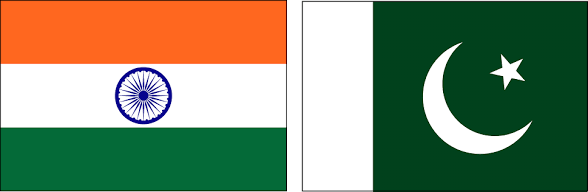
DAILY COURIER — The 1960 Indus Waters Treaty imposed one-sided obligations on India while allowing Pakistan to use its dispute mechanisms to block Indian projects, according to Dr. Pradeep Kumar Saxena, former Indian Commissioner for Indus Waters.
In a detailed analysis, The Indus Waters Treaty: Asymmetric Obligations, Unequal Concessions and Pakistan’s Weaponisation_, Saxena argues that India’s goodwill during negotiations was codified into binding concessions that left the country with only 20 percent of the Indus system’s water.
Partition and the price of compromise
The Indus system comprises six rivers: the Indus, Chenab, Jhelum, Ravi, Beas, and Sutlej flowing through India and Pakistan. After Partition in 1947, India, as the upper riparian, held the headwaters of most rivers, while Pakistan’s Punjab plains depended on continued flows for agriculture.
MORE STORIES: https://dailycourier.com.ng/abuja-under-siege-as-indiscriminate-tree-felling-threatens-lives-and-environment/
Despite its own needs in Punjab and Rajasthan, India signed the treaty on 19 September 1960 with World Bank facilitation. Saxena states that from the start, India took a constructive approach while Pakistan pursued maximalist demands that shaped a more favourable outcome for Islamabad.
He cites the World Bank’s 5 February 1954 proposal, which required India to abandon planned developments on the upper Indus and Chenab, forgo diverting 6 million acre-feet from the Chenab, and give up water use at Merala and in Kutch. India accepted almost immediately, while Pakistan delayed until 22 December 1958 and continued developing uses on the Western rivers without similar constraints.
Allocation and financial cost
Under the final deal, India received exclusive rights to the Eastern rivers: Sutlej, Beas, and Ravi — with about 33 million acre-feet of annual flow. Pakistan received the Western rivers — Indus, Chenab, and Jhelum — with about 135 million acre-feet, or roughly 80 percent of the system. India was allowed only limited, non-consumptive uses on the Western rivers, mainly run-of-river hydropower, under strict design and operational limits.
Saxena also highlights a financial provision he calls unprecedented: India agreed to pay about £62 million, roughly $2.5 billion in present value, to finance water infrastructure in Pakistan-occupied Kashmir. He says India effectively paid to facilitate a deal that heavily favoured Pakistan on water allocation.
One-sided restrictions
The treaty restricts India’s irrigated cropped area on the Western rivers, caps storage volumes, and imposes design criteria that limit pondage and storage for hydropower projects. No equivalent obligations apply to Pakistan. Saxena argues this framework treats the upstream state as the one requiring oversight while guaranteeing flows to the downstream state.
Obstruction and narrative
Since signing, Pakistan has used the treaty’s dispute provisions to delay Indian projects rather than resolve disputes, Saxena contends. He lists Baglihar, Kishenganga, Pakal Dul, and Tulbul as examples of projects subjected to prolonged Pakistani challenges. He adds that Pakistan has sometimes acknowledged the benefits of Indian projects for regulating flows and moderating floods while continuing to oppose them.
Saxena also says Pakistan has built an international narrative of India as a potential “water aggressor” despite India’s compliance through the 1965 and 1971 wars, the 1999 Kargil conflict, and decades of cross-border terrorism. “India has maintained compliance even as Pakistan has used its territory to conduct state-sponsored terrorism against India,” he states.
Development costs for India
The analysis outlines three main impacts. Large areas of Rajasthan and parts of Punjab remain arid or dependent on costlier water sources. Jammu and Kashmir’s hydropower potential remains largely untapped due to design restrictions and the risk of prolonged arbitration. India’s inability to optimally develop hydropower on the Western rivers also affects national energy security.
Case for change
Saxena argues that the treaty’s legitimacy rested on good faith implementation, a condition he says no longer exists. He cites Pakistan’s use of state-sponsored terrorism, including the 2001 Parliament attack, the 2008 Mumbai attacks, and the April 2025 Pahalgam attack, as evidence that the premise of goodwill has collapsed.
Click on the link below to follow DAILY COURIER on WhatsApp:https://whatsapp.com/channel/0029VaAJv3FFnSz23aQ4Ab1M
“Bilateral agreements cannot be selectively honoured,” he writes. “A state cannot simultaneously breach the foundational norms of inter-state conduct while demanding that its negotiating partner fulfil treaty obligations that disproportionately benefit the norm-breaker.”
Conclusion
The treaty has been mischaracterised as a triumph of diplomacy, Saxena concludes. Instead, he describes a process where Indian goodwill met Pakistani intransigence, resulting in an agreement that surrendered 80 percent of the water, imposed one-sided restrictions, and required financial compensation for that surrender.
“It is the long-overdue correction of an asymmetric arrangement premised on a goodwill that was never reciprocated,” he states. “To those who ask why hold the Treaty in abeyance now, it would be useful to remember that there is no wrong time for a right decision.”




Tolu Bankole Mourns Former Ogun Lawmaker, Hon. Lukman Adiro

President’s Visit: Kebbi Commuters Hail Tinubu As Malando-Ngaski Road Cuts Travel Time By Half

UEFA Unanimously Backs Diallo To Oust Infantino In March 2027 FIFA Election

Top 25 Universities In Nigeria According To TIMES Ranking 2025

Nigeria Ranked Second In Africa for Catholic Population
