
Cover Page
VIP Police Withdrawal: Tinubu Doubles Down, Senate Cries Foul

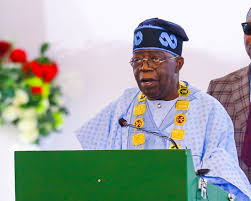
• Tinubu directs immediate redeployment, backs NSCDC takeover
• Senate fumes: Ministers, governors’, singers still have escorts
• Police Affairs Minister Gaidam sidelined by lingering stroke – Sources
Monday Reuben, Abuja
DAILY COURIER – President Bola Tinubu on Wednesday stood firmly behind his controversial November 24 directive to strip VIPs of police escorts, declaring that the withdrawal “should be effected” without exception and ordering the Nigeria Security and Civil Defence Corps (NSCDC) to immediately fill the vacuum.
Speaking at the Federal Executive Council meeting, the President dismissed growing complaints from affected politicians and businessmen, insisting that Nigeria’s spiralling insecurity leaves no room for sacred cows.
“I honestly believe in what I said… It should be affected. We face challenges here and there of kidnapping and terrorism. We need all the forces we can utilise,” Tinubu said, revealing that he had personally directed the Minister of Interior, Olubunmi Tunji-Ojo, to collaborate with the Inspector-General of Police, Kayode Egbetokun, and the NSCDC leadership to replace withdrawn police officers with civil defence personnel.
“If you have any problem of security because of the nature of your assignment, please contact the IGP and get my clearance,” he added, in what aides described as a subtle warning that no informal lobbying would be tolerated.
MORE STORIES: https://dailycourier.com.ng/governor-ododo-unveils-kogi-hunan-free-trade-zone-projects-500m-annual-fdi-50000-jobs/
The President also instructed the National Security Adviser, the Director-General of State Security Service and other agencies to form a committee to review the entire VIP protection architecture.
In the midst of all these developments, questions have arisen about the conspicuous absence of the Minister of Police Affairs, Senator Ibrahim Gaidam, a key figure who would typically play a central role in implementing such directives. Gaidam, the former Governor of Yobe State, has been notably missing from his office and public engagements, fueling speculation within government circles. Sources close to the ministry reveal that the minister has been grappling with a protracted ailment that predates his appointment to the cabinet in 2023.
The condition, described as a partial stroke, has severely limited his mobility and ability to perform daily duties. Insiders say the illness first manifested during his time as a senator, but Gaidam pushed through to accept the ministerial role, hoping to contribute to national security reforms despite his health challenges. However, the stroke’s lingering effects— including reduced physical stamina and occasional medical treatments abroad—have kept him sidelined for extended periods. This absence has left a void in the coordination between the presidency and police leadership, with some officials quietly expressing concerns that it could slow down the execution of Tinubu’s orders.
Gaidam’s health struggles highlight broader issues within the administration, where personal ailments among top officials occasionally intersect with national policy implementation. While the minister’s team maintains that he remains engaged remotely and is expected to return soon, critics argue that his prolonged unavailability underscores the need for more robust succession planning in critical ministries. For now, the Interior Minister has stepped in to bridge the gap, but Gaidam’s situation adds another layer of complexity to the already contentious VIP security overhaul.
But barely 24 hours later, the policy hit a political storm in the National Assembly.
Senators, led by Abdul Ningi (PDP, Bauchi Central), accused the police high command of selective enforcement, claiming lawmakers have been deliberately targeted while ministers, governors’ families, business tycoons and even celebrities continue to enjoy full police protection.
“I have seen ministers with heavy security, children of political office holders with orderlies, and even singers enjoying full protection. But a Senator of the Federal Republic cannot have even one orderly? This is unheard of in any democracy,” Ningi thundered on the floor of the Senate.
The chamber erupted in anger, forcing Deputy Senate President Barau Jibrin to admit that the leadership had already taken up the matter with the presidency.
“We expect a reaction regarding the police orderlies withdrawn from senators. Why is the directive of the President being flouted?” Jibrin asked, before directing the Senate Committee on Police Affairs to investigate the “selective implementation” and report back in four weeks.
Outside the National Assembly, reactions remain sharply divided.
Senator Ali Ndume renewed his call for the policy to be extended to lawmakers’ spouses and children, describing the current arrangement as “insulting”.
Nobel Laureate Wole Soyinka repeated his public criticism of the “battalion” of armed escorts around presidential son Seyi Tinubu, while security experts Mike Ejiofor and retired AIG Abutu Yaro warned that handing VIP protection to the NSCDC without massive retraining could create dangerous gaps.
As of Wednesday night, the police had withdrawn escorts from at least 11,566 personnel since the presidential order, but sources in the National Assembly claim most of those affected are either opposition figures or legislators not in the president’s inner circle – a charge the Force Headquarters has vehemently denied.
Click on the link below to follow DAILY COURIER on WhatsApp👇 https://whatsapp.com/channel/0029VaAJv3FFnSz23aQ4Ab1M
With the Senate now threatening to summon the IGP and the NSCDC Commandant-General, what began as a routine security reform has rapidly escalated into a full-blown political crisis testing President Tinubu’s authority over Nigeria’s powerful elite.
For now, the President appears unmoved: no VIP, no matter how highly placed, is bigger than Nigeria’s security, his aides insist.
Whether the uniformed men on the streets will get the memo remains to be seen.









Tolu Bankole Mourns Former Ogun Lawmaker, Hon. Lukman Adiro

President’s Visit: Kebbi Commuters Hail Tinubu As Malando-Ngaski Road Cuts Travel Time By Half

UEFA Unanimously Backs Diallo To Oust Infantino In March 2027 FIFA Election

Top 25 Universities In Nigeria According To TIMES Ranking 2025

Nigeria Ranked Second In Africa for Catholic Population
