
Cover Page
“Nigerians Set Agenda As Prof. Joash Amupitan Resumes As INEC Czar”

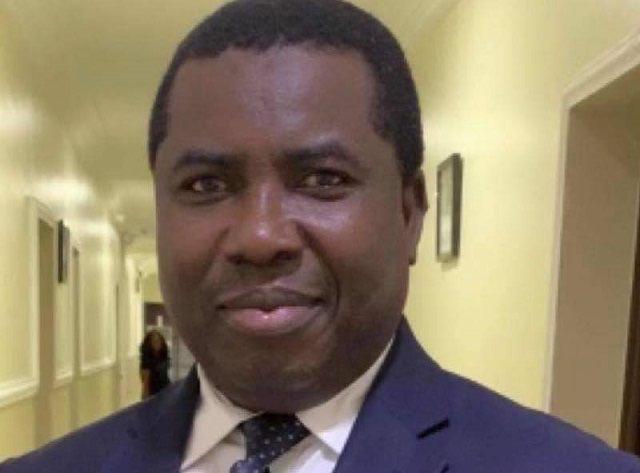
• New INEC Chair meets top directors today as reforms loom
• Senate pushes electoral law overhaul alongside fresh leadership
• Public scrutiny intensifies amid questions on process and transparency
‘Seun Ibukun-Oni, Abuja
DAILY COURIER – Today marks a pivotal moment in Nigeria’s democratic journey as Joash Ojo Amupitan (SAN) formally resumes duty as Chairman of the Independent National Electoral Commission (INEC). Having been confirmed by the Senate on 16 October 2025, Amupitan inherits the helm of the electoral body amid calls for sweeping reforms.
His first official act will be presiding over an inaugural meeting with INEC directors at the Commission’s headquarters in Abuja. According to a press notice, the event is scheduled for Thursday 23 October 2025 at 1:30 pm in the Conference Hall. Members of the Press Corps have been invited to cover the opening ceremony.
As Nigeria awaits this leadership transition, the Senate has in parallel advanced proposed amendments to the electoral legal framework that could reshape the contestation and adjudication of elections. In a move seen as bold, lawmakers are proposing that INEC bear the burden of proof in election petitions—a marked departure from current practice.
MORE STORIES: https://dailycourier.com.ng/group-demands-an-end-to-all-killings-of-christians-in-nigeria/
Under the bill introduced as part of the Criminal Code Act (Amendment) Bill, 2025 (and tied to the proposed Electoral Act 2025 Bill), the organisation would have to defend the integrity of elections it conducts, rather than petitioners proving irregularity under the Evidence Act.
Supporters of the shift, including Senate President Godswill Akpabio and Senator Seriake Dickson, argue this places accountability where it belongs. “INEC obviously must be held responsible because it is the one in charge of conduct and logistics,” Akpabio stated.
But the proposal has sparked sharp criticism. The Peoples Democratic Party (PDP) has warned that placing the burden solely on INEC could undermine democracy if the body’s independence is in doubt.
Enter Amupitan, a legal scholar born in Ijumu LGA, Kogi State, whose appointment fills a longstanding regional gap in Nigeria’s electoral leadership. According to his profile, he is a Professor of Law at the University of Jos, a Senior Advocate of Nigeria, and a specialist in company law and evidence.
His nomination by President Bola Ahmed Tinubu was unanimously approved by the National Council of State earlier this month, and subsequently confirmed by the Senate after screening cleared him of any criminal record and security issues.
The timing of his assumption is critical. With off-cycle governorship elections in states like Anambra and Ekiti on the horizon and the major 2027 general elections looming, his leadership will test whether Nigeria’s electoral machinery can be both independent and credible.
Stakeholders have set a clear agenda for the new chairman: address the transparency of the INEC Results Viewing Portal (IReV), ensure full deployment of election technology, deliver real-time result transmission, and help restore public trust in the electoral process.
Amidst this agenda, civil society observers highlight that the process of Amupitan’s appointment itself raises questions about openness and meritocracy. Analysts from the Centre for Democracy & Development (CDD) argue that legacy patterns of opaque selection still undermine public confidence.
Political parties are also watching closely. The Labour Party cautioned that unless punitive mechanisms are built in, the transfer of burden could simply shift power without accountability. Meanwhile, the New NNPP publicly endorsed the shift, citing the need to curb frivolous petitions.
Click on the link below to follow DAILY COURIER on WhatsApp👇 https://whatsapp.com/channel/0029VaAJv3FFnSz23aQ4Ab1M
Internally at INEC, the directors’ meeting today is expected to set the tone for Amupitan’s priorities: technology upgrade, human resource development, stronger INEC-party interfaces, and state-level capacity building. It is being viewed as symbolic of a fresh leadership era.
Crucially, Nigerians are placing high expectations on this new leadership. As the law-maker from Plateau, Senator Simon Lalong, remarked, this is not just a reform—it is “not a mere amendment” but a roadmap for rebuilding democracy before the next major vote.
With the inauguration meeting underway, the question remains: Will Prof. Amupitan steer INEC into a new chapter of impartiality and technological competence, or will the weight of entrenched politics and institutional skepticism persist? The stability of Nigeria’s democracy may hinge on that answer.







Tolu Bankole Mourns Former Ogun Lawmaker, Hon. Lukman Adiro

President’s Visit: Kebbi Commuters Hail Tinubu As Malando-Ngaski Road Cuts Travel Time By Half

UEFA Unanimously Backs Diallo To Oust Infantino In March 2027 FIFA Election

Top 25 Universities In Nigeria According To TIMES Ranking 2025

Nigeria Ranked Second In Africa for Catholic Population
