
Business
Sliding Oil Prices Rattle Nigeria’s 2025 Budget Plans, OPEC May Intervene

‘Seun Ibukun-Oni, Abuja
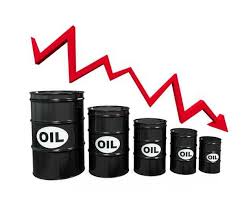
Image depicting sliding oil price
DAILY COURIER – Nigeria and fellow oil-producing nations are in uneasy waters as global crude oil prices continue their downward slide, prompting urgent consultations among OPEC members and other producers. The country’s economic prospects for 2025—heavily anchored on oil revenue—are now at risk, with mounting concerns about the viability of its ambitious N54.35 trillion national budget.
The alarm bells rang loudest this April, when Brent crude oil prices fell sharply to $63 per barrel—a steep drop from the $75 benchmark price that underpins Nigeria’s budget assumptions. The crash, driven by fears of global economic slowdown and escalating trade tensions, has not only unsettled global markets but also jolted the economies of oil-dependent nations across the world.
In Nigeria, the impact is potentially devastating.
MORE STORIES: https://dailycourier.com.ng/palm-sunday-can-calls-for-peace-unity-amid-grief-over-plateau-killings/
The 2025 national budget anticipates oil contributing roughly 56 percent of total government revenue. With plans to produce 2.06 million barrels of crude oil and condensates daily, the budget was predicated on oil selling at $75 per barrel throughout the year. But the unfolding reality presents a stark contrast.
“This price plunge places Nigeria in a very vulnerable position,” said one analyst familiar with the country’s fiscal framework. “Every dollar lost below the benchmark puts pressure on government funding for critical sectors—health, education, infrastructure, and even debt servicing.”
The Nigerian government is now actively engaging with its partners in the Organization of the Petroleum Exporting Countries (OPEC) and other oil-producing countries to explore coordinated responses aimed at stabilizing the volatile market. Sources say consultations are already underway to consider production adjustments or other strategic moves to halt the slide.
Meanwhile, the economic ripple effects are being felt far beyond Nigeria. Saudi Arabia, the world’s top oil exporter, has a budget breakeven point estimated at $91 per barrel, according to the International Monetary Fund (IMF). With oil now trading nearly $30 below that, the Kingdom may be forced to tap into its reserves, borrow more, or rethink spending on its ambitious giga-projects like NEOM.
Kuwait, OPEC’s fourth-largest producer, recently passed legislation to re-enter the debt markets after eight years, in response to similar fiscal strains. Its economy, the IMF warned late last year, remains in recession and is “highly exposed” to commodity price shocks and slowing global growth.
Even Russia, which typically maintains a cautious fiscal stance, has expressed worry. Central Bank Governor Elvira Nabiullina admitted that prolonged low oil prices and growing tariff conflicts could significantly weaken the country’s economy.
“The oil price drop we’ve seen over the last week has taken us into territory where for a lot of oil-dependent economies, it’s not going to be what they need to balance their budgets—nowhere close,” said Richard Bronze, head of geopolitics at Energy Aspects, in a recent interview.
Back home, Nigeria faces additional hurdles. Persistent pipeline vandalism, oil theft, and declining foreign investment in the upstream sector continue to limit production capacity. These structural issues raise doubts about whether the country can even meet its 2.06 million barrels per day production target.
“This is not just about prices,” said an oil sector stakeholder who spoke anonymously. “It’s also about our ability to produce and sell efficiently. Without addressing the security and investment climate, even a rebound in prices might not help much.”
https://dailycourierng.blogspot.com/2025/04/frsc-debunks-viral-ai-generated-video.html
As the government seeks solutions, the implications for ordinary Nigerians could be severe. Should revenues fall short, social programs, infrastructure projects, and public sector wages may face delays or cuts, potentially heightening economic uncertainty in an already fragile environment.
For now, Nigeria waits—hopeful that the efforts with OPEC and other global producers will yield a coordinated strategy to stabilize the market. But with prices teetering and economic pressures mounting, the country stands at a critical fiscal crossroads.
And the world watches.




Tolu Bankole Mourns Former Ogun Lawmaker, Hon. Lukman Adiro

President’s Visit: Kebbi Commuters Hail Tinubu As Malando-Ngaski Road Cuts Travel Time By Half

UEFA Unanimously Backs Diallo To Oust Infantino In March 2027 FIFA Election

Top 25 Universities In Nigeria According To TIMES Ranking 2025

Nigeria Ranked Second In Africa for Catholic Population
