
National News
What Tinubu’s Appointments Say About Regional Politics

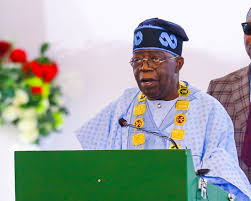
• Two of Ndume’s kinsmen got top NNPC roles, Presidency reminds him
‘Seun Ibukun-Oni, Abuja
Tayo Busayo, Abuja
DAILY COURIER – When President Bola Ahmed Tinubu stepped into office on May 29, 2023, Nigerians held their breath—not just for his bold economic promises like scrapping the fuel subsidy, but for something equally telling: who he’d choose to help steer the ship. In a country as diverse as Nigeria, with its six geopolitical zones—North-East, North-West, North-Central, South-East, South-West, and South-South—political appointments are more than just a staffing exercise. They’re a litmus test of fairness, inclusion, and the delicate art of balancing a nation that’s often pulled in different directions.
Nearly two years into his presidency, Tinubu’s appointment record is a hot topic. Some cheer his picks as a masterstroke of experience and loyalty; others grumble about perceived favoritism. Bayo Onanuga, Tinubu’s Special Adviser on Information and Strategy, has been a vocal defender of these choices, often framing them as part of a broader vision. Let’s peel back the layers and see how Tinubu’s appointments—and Onanuga’s words—have played out across Nigeria’s sprawling geopolitical map as of April 8, 2025.

Map of Nigeria showing geopolitical zones
The Starting Line: A Cabinet Takes Shape
Tinubu hit the ground running—or at least, as fast as Nigeria’s political machinery allows. By August 2023, he’d sent his first batch of ministerial nominees to the Senate, a constitutional must-do within his first 60 days. The list, when finalized, boasted 48 ministers, later creeping up to 55. Nigerians immediately started counting: how many from my zone?
The breakdown told a story. The North, with its three zones, snagged 32 slots: 11 for the North-West, 12 for the North-Central, and 9 for the North-East. The South tallied 23: 11 for the South-West, 7 for the South-South, and a leaner 5 for the South-East. On paper, the North edged out the South, but numbers alone don’t capture the full picture. Each zone has its own history, population, and political weight—and that’s where the chatter begins.
The South-West: Home Turf or Heavy Hand?
Tinubu, a Yoruba man from Lagos, hails from the South-West, and his 11 appointments there—matching the North-West’s haul—raised eyebrows. Critics, like the Human Rights Writers Association of Nigeria (HURIWA), cried nepotism early on, pointing to picks like Olayemi Cardoso (Central Bank Governor) and Zacchaeus Adedeji (FIRS Chairman), both Yoruba. Onanuga, however, has pushed back hard. In a November 2024 statement, he said, “The President has assembled a team of competent hands, regardless of where they come from, to deliver on his Renewed Hope Agenda. To suggest otherwise is to miss the point of governance.” He’s framed these choices as merit-driven, not ethnic favoritism.
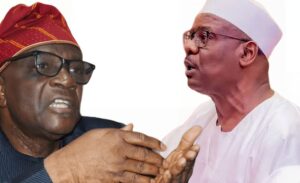
Photo collage of Bayo Onanuga and Ali Ndume
Still, the optics sting. The South-West’s prominence isn’t just in numbers but in influence—key economic roles often land there. Onanuga’s defense—“We are building a government that works for all Nigerians, not just one region”—hasn’t fully quieted the grumbling, especially when his own Yoruba roots mirror Tinubu’s.
The North: A Powerhouse Still in Play
Up North, the numbers look robust: North-West (11), North-Central (12), North-East (9). Heavyweights like Nyesom Wike (FCT Minister, though South-South by origin) and Mohammed Badaru (Defence, North-West) suggest Tinubu’s keeping the region’s clout in mind. Onanuga has highlighted this balance. In an August 2024 press release after a National Council of State meeting, he noted, “Ministers briefed the council about the work the Tinubu Administration has been engaged in since May 29, 2023… One of the past leaders praised the government and its ministers for the impressive work being done.” He added, “You have not been sleeping. You have been working. Well done”—a nod to northern voices in the cabinet.
More Stories:
Yet, some northern groups, like the Arewa Economic Forum, whisper “lopsidedness.” Onanuga’s retort? “The President acknowledges the efforts of all regions in his election. The North’s role is undeniable, and their representation reflects that,” he said in a February 2025 interview on Channels TV, addressing Nasir El-Rufai’s exclusion from the cabinet.
The South-East: A Sore Spot
If there’s a zone feeling shortchanged, it’s the South-East, with just five ministers—one per state in a region of five. Groups like the South East APC Young Progress “‘Five feels like a token,’ a trader in Onitsha told me last month.”ives Forum wave the 1999 Constitution’s Federal Character clause, calling it a “glaring imbalance.” The sting deepened given Tinubu’s mere 1% vote share there in 2023. Onanuga has tackled this head-on. In a July 2024 statement responding to Peter Obi’s criticism, he said, “The President is committed to inclusivity. The South-East’s development is a priority, as seen in projects like the manufacturing hub initiative.” Yet, he sidestepped the appointment gap, focusing instead on policy promises—a move that hasn’t fully soothed tensions.
“Five feels like a token,” a trader in Onitsha told me last month. “We want to see ourselves in this government, not just hear about it.”
South-South: Steady but Watching
The South-South, with seven appointees for six states, sits in a quieter middle ground. Figures like Heineken Lokpobiri (Petroleum) signal a nod to the oil-rich region. Onanuga has touted this as strategic. In an April 2024 release, he wrote, “The Tinubu Administration is ensuring every zone contributes to national growth. The South-South’s role in energy security is critical, and their representation reflects that.” Still, locals wonder if seven is enough to tackle militancy and environmental woes. “We’re not complaining yet,” a Port Harcourt resident shrugged, “but we’re watching.”
Agencies and Advisers: A Wider Lens
Beyond the cabinet, Tinubu’s picks for agency heads and special advisers—over 70 by April 2025—add another layer. The South-West shines again, with about 30% of agency slots, including Bisoye Coker-Odusote (NIMC) and Adedeji (FIRS). The North-West and North-Central follow, with Musa Aliyu (ICPC, North-West) and Olawale Olopade (National Sports Commission, North-Central). The South-East (around 10%, e.g., Nnanna Kalu, NASC) and South-South (e.g., Patrick Giwa, NASC) lag. Onanuga has framed this as pragmatic. In a January 2025 statement, he said, “The Naira is holding its ground against the greenback… These agency heads are driving economic stability, chosen for their expertise, not just their origins.”
Special advisers like Tunde Rahman (Media, South-West) and Daniel Bwala (Public Communications, North-East) show a mix, but the South-West’s sway persists. Onanuga’s take? “The President’s team is a blend of experience and loyalty, cutting across zones to deliver results,” he said in October 2023, shortly after his own appointment.
A Balancing Act or a Regional Tilt?
These agency and adviser picks amplify the cabinet’s narrative. Onanuga insists it’s about merit, not favoritism. “It’s not just about quantity,” he told BusinessDay in November 2024, countering Obasanjo’s critique of reforms. “It’s who gets the juicy posts—and they’re going to those who can deliver.” Yet, the South-West’s grip on high-impact roles like finance and security keeps critics vocal, especially when the South-East and South-South feel sidelined.
Beyond the Numbers: What’s at Stake?
Tinubu’s appointments aren’t just about filling chairs—they’re a signal of intent. His “Renewed Hope” manifesto promised inclusivity, and Onanuga has leaned on that. “The President is not in denial of anyone’s efforts,” he said in February 2025, addressing El-Rufai’s grumbling. “Nasir did a lot in installing President Tinubu, and if he is not there it doesn’t mean he will bring down the roof.” But Nigeria’s diversity means every pick is a tightrope walk.
Take the youth angle: Tinubu’s swapped older nominees for younger ones—like the Minister of Youth Development—winning applause. Onanuga’s boasted about this too: “In furtherance of his commitment to delivering good governance, President Tinubu has embarked on strategic projects across the country,” he said in May 2024, deflecting anniversary speech confusion with Ajuri Ngelale. Yet, economic woes—fuel subsidy cuts, naira struggles—demand a team that delivers, not just represents.
Voices from the Ground
I spoke to everyday Nigerians. Amina, a teacher in Kano (North-West), feels optimistic: “We’ve got solid people here; I trust Tinubu’s listening.” Chukwudi, a mechanic in Enugu (South-East), is skeptical: “Five ministers? It’s like he’s saying we don’t matter.” Tunde, a driver in Lagos (South-West), shrugs: “He’s our man, but he’s got to spread it better.”
The Road Ahead
As of April 2025, Tinubu’s got time to tweak the balance—more advisers and agency heads could shift the narrative. His decentralization of NCAT into six zonal campuses this year hints at broader vision. Onanuga’s optimistic: “More transformative projects will be inaugurated by President Tinubu’s administration for the benefit of all Nigerians,” he said in May 2024. But with economic pressures and regional tensions simmering, the stakes are high.
Nigeria’s watching, and so are we. Will Tinubu’s appointments—and Onanuga’s spirited defense—bridge divides or widen them? The jury’s still out, but in this geopolitical chess game, every move counts.




Tolu Bankole Mourns Former Ogun Lawmaker, Hon. Lukman Adiro

President’s Visit: Kebbi Commuters Hail Tinubu As Malando-Ngaski Road Cuts Travel Time By Half

UEFA Unanimously Backs Diallo To Oust Infantino In March 2027 FIFA Election

Top 25 Universities In Nigeria According To TIMES Ranking 2025

Nigeria Ranked Second In Africa for Catholic Population
